
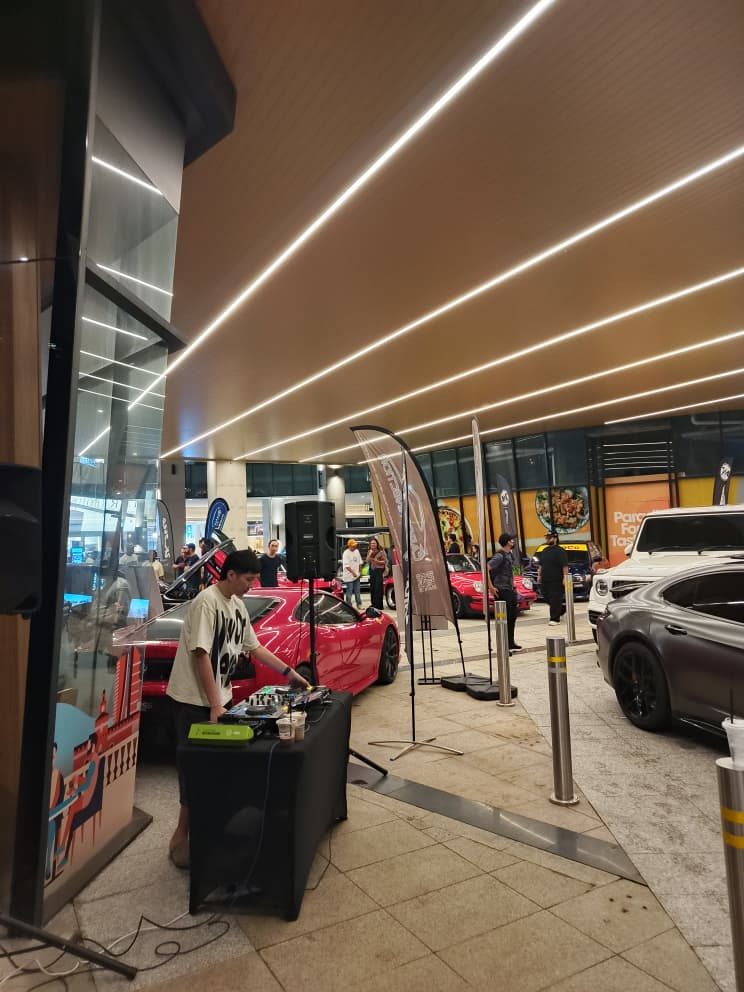
Car culture communities are a different audience to the average mall-activation crowd. They already know what a good simulator rig feels like, they notice when a livery is lazy, and they're not easily impressed by a screen and a wheel on their own. When GoStreet — a Malaysian app built for the car lifestyle and enthusiast scene — wanted to power its app launch with a sim racing activation, the brief wasn't "give people something to play." It was "give this specific audience something worth their respect."
Vertex's answer was a time attack format: rather than a free-play rig where anyone takes a casual lap, every run was timed and ranked on a live leaderboard, turning a single lap into a public, competitive statement. It's a simple mechanic, but it changes the entire energy of an activation — people don't just play once and move on, they come back to beat their own time, and then they come back again to beat whoever just beat them.
Built for an outdoor, community-first event
The launch activation ran outdoors, alongside a DJ booth and a line-up of enthusiast cars brought by the community itself — the kind of setting where the sim rigs needed to hold their own next to the real cars parked a few metres away, not distract from them. That's a different design problem to an air-conditioned mall concourse: equipment needs to be weather-appropriate, sightlines need to work in daylight, and the whole setup needs to read as part of the same scene as the car meet around it, not a separate booth plonked in the middle of one.
Why a prize pool changes the room
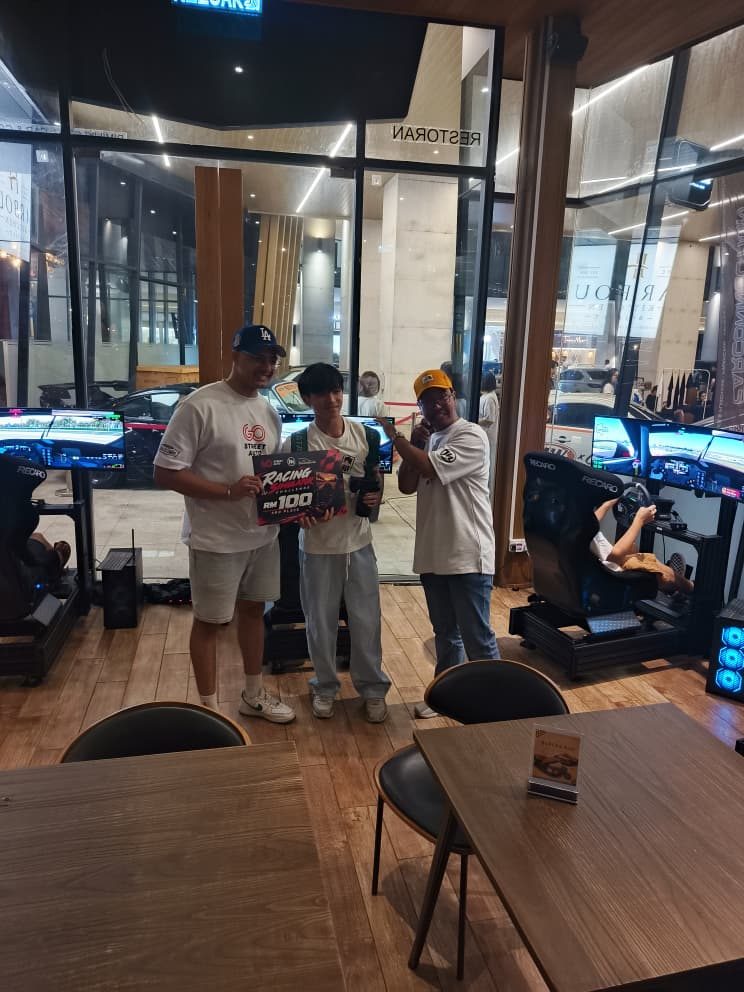
The time attack ran as a "Racing Rumble," with a cash prize on the line for the fastest lap of the day. That one detail matters more than it looks: a free-play rig invites a casual lap or two; a rig with a named challenge and a prize on a physical sign invites people to actually try, to come back for a second attempt, and to pull their friends over to watch. By the end of the event, the leaderboard itself had become part of the entertainment — a crowd gathers around a leaderboard in a way it never gathers around an idle simulator.
A leaderboard turns a rig from something people glance at into something people compete over.
What this format is good for
Time attack sim racing works best with an audience that already has some competitive instinct — car communities, motorsport fans, gaming crowds, even corporate team-building groups who respond well to a public leaderboard. It's a format Vertex now proposes specifically when a client's audience is more engaged, more opinionated and harder to impress than a general public crowd, because the format rewards exactly that kind of audience rather than trying to work around it.
For GoStreet, the result was an app launch that didn't feel like a launch at all — it felt like a car meet that happened to have a serious piece of racing equipment at the centre of it, which is precisely the kind of credibility a car culture brand needs to earn, not something it can buy with a banner.
Planning a community or lifestyle activation?
Time attack leaderboards, King-of-the-Hill formats and fully staffed sim racing rigs — built for your audience, not a generic crowd.
Talk to us