
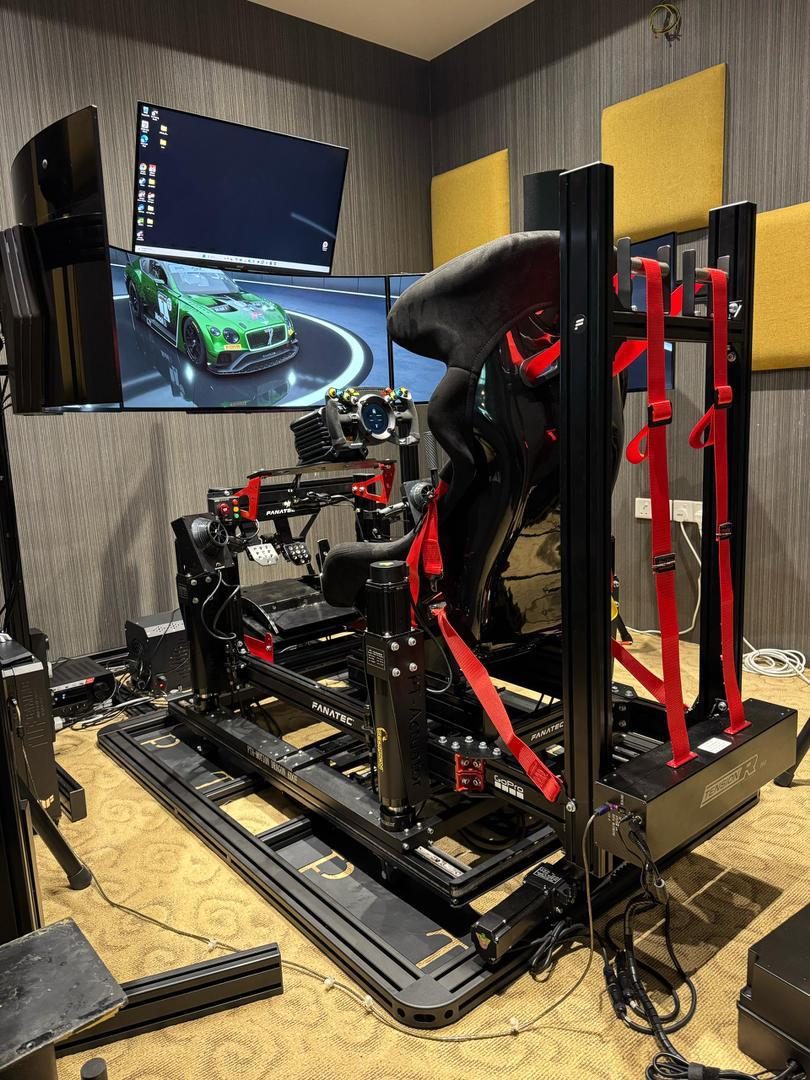
Motion is the single biggest upgrade a sim rig can get after the wheel and pedals — and the one most rental companies skip, because it's expensive to build well and easy to build badly. Vertex runs its own motion systems, from 4-axis entry setups to full 7-axis platforms, and the honest answer to "which one do I need" depends entirely on what the rig is for.
What the axes actually mean
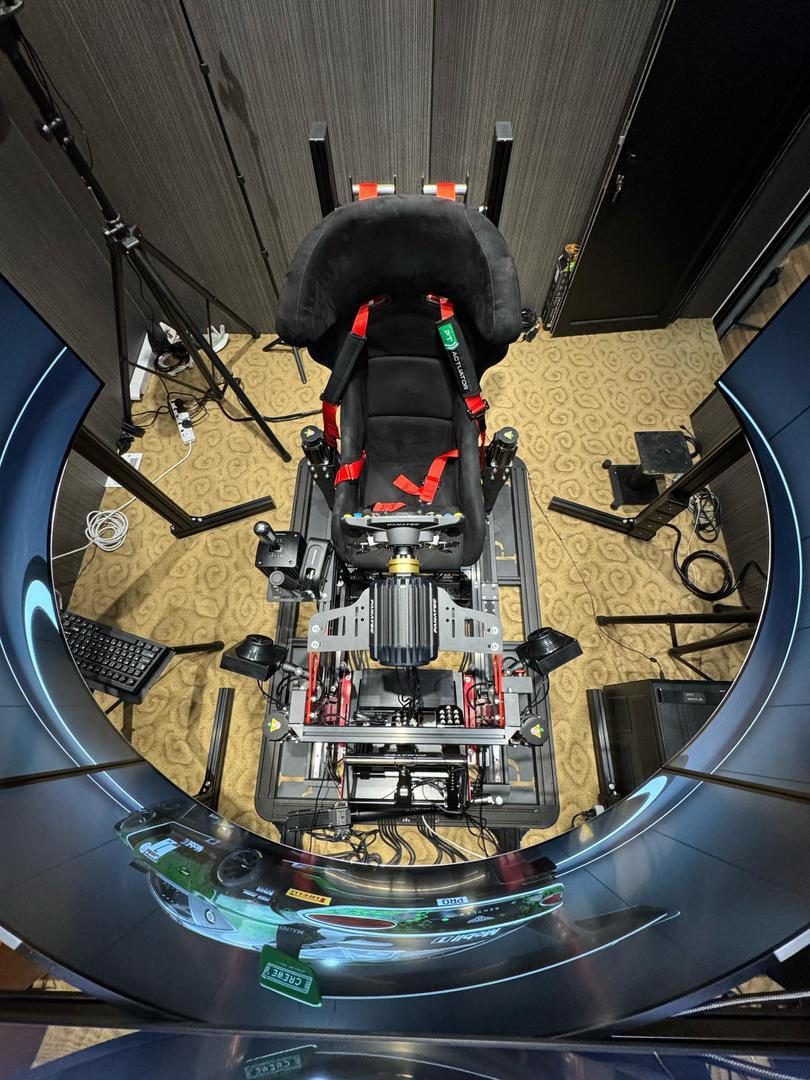
A 4-axis system handles the fundamentals: pitch (nose dipping under braking, lifting under acceleration), roll (body leaning through a corner), heave (the vertical drop over a crest) and surge-style front-back motion blended through the seat. For most events and most drivers, that's enough to transform a rig from "racing game" to "racing simulator" — it's the jump that matters most.
Push to 6-axis and you add true independent surge and sway — the rig can now shove you forward under hard braking and sideways under a sharp direction change, rather than approximating it through tilt alone. A full 7-axis platform adds a traction-loss axis on top of that: the fine, high-frequency vibration of a tyre right on the edge of grip, or losing it entirely. That's the axis that tells an experienced driver exactly when the car let go, before the screen does.
Most people can't describe the difference between 4-axis and 7-axis motion in words. They can absolutely feel it the moment they're strapped into both, back to back.
Tuned per car, per track — not a generic setting
A motion system that's switched on but not tuned is almost worse than no motion at all — it moves, but it doesn't match what's on screen, and that mismatch is what causes discomfort. Every motion rig we build or deploy gets tuned to the specific car and track combination it's running, so the bump through Turn 2 at Sepang actually arrives at the moment your screen shows you hitting it, not half a second early or late.
Why the chassis underneath has to be engineered for it
Motion platforms put real, repeated mechanical load through whatever they're bolted to. A rig frame that wasn't designed to carry that load will flex, rattle loose or transmit vibration somewhere it shouldn't — which is exactly why our motion systems are built on TORQ's direct-drive-rated aluminium chassis rather than retrofitted onto frames designed for a static setup. The motion and the chassis are designed together, not bolted together after the fact.
Who actually needs 7-axis, and who's better off at 4
A brand activation running hundreds of first-time drivers through a rig over a weekend gets more value from a reliable, well-tuned 4-axis system than a temperamental 7-axis one — the goal there is a consistently great first impression, not a tool for shaving tenths. A dedicated sim racer training seriously, or a flagship showroom build meant to impress people who already know what good motion feels like, is where 7-axis earns its place. We'll tell you honestly which one fits your build before we quote it.
Want motion built into your next rig?
Standalone motion systems or fully integrated into a bespoke TORQ-built chassis — tuned to your car, your track, your budget.
Ask about motion systems